
Designing Fear: How Atmosphere Beats Jump Scares in Psychological Thrillers
Discover how atmosphere creates deeper tension than jump scares in psychological thriller games. Insights from a solo indie developer building I of the Storm.
GAME DEVELOPMENT
Steve Miller
4/8/20262 min read

Designing Tension: Why Atmosphere Matters More Than Jump Scares
In games inspired by horror, it’s easy to rely on the obvious: a sudden noise, a flash in the dark, something rushing toward the player. For a moment, it works. But moments fade.
Tension doesn’t.
At Chasing Windmills Games, we’re not after momentary reactions—we’re crafting experiences that linger. The kind that stays with you after the screen fades to black. The kind that makes you hesitate before taking the next step.
Atmosphere Over Shock
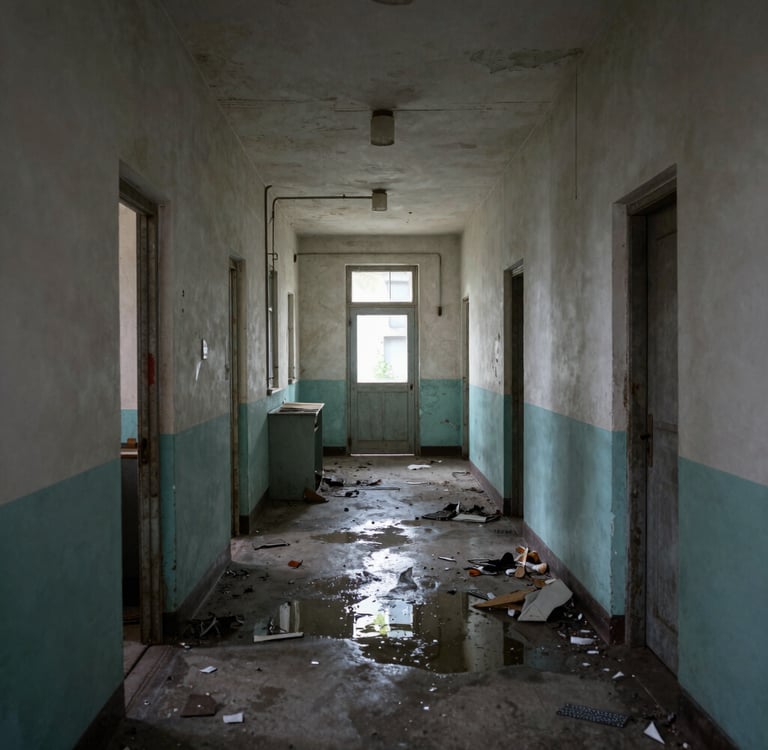
A psychological thriller isn’t built on fear alone—it’s built on uncertainty. It’s the feeling that something is wrong, even when nothing is happening. It’s the quiet moments that stretch just a little too long. The spaces that feel empty—but not safe.
Atmosphere lives in the details:
Light that reveals just enough—and no more, sound that suggests presence without proof, spaces that feel lived in, then abandoned, pacing that gives your thoughts time to turn against you.
It’s not about what the player sees. It’s about what they begin to believe.
The Unknown Is the Real Threat
When something is fully understood, it loses its power. But when something is incomplete—fragmented—uncertain…your mind fills in the gaps. And those gaps become something far more personal.
In I of the Storm, not everything is explained.
Not every sound has a source.
Not every question has an answer.
Because the moment certainty takes hold, tension begins to fade.
Breaking the Pattern
Jump scares follow a rhythm:
Silence → Impact → Relief
And once that rhythm is learned, the experience becomes predictable. Instead of tension, the player anticipates the timing. Instead of immersion, they wait for the next cue. Atmosphere breaks that pattern. It replaces spikes with a constant weight—something subtle, persistent, and difficult to shake.
Every Space Tells a Story
At Chasing Windmills Games, environments aren’t just backdrops—they’re part of the narrative. Each hallway, each room, each object exists for a reason. Not to explain—but to suggest.
Why does this place feel disturbed?
What happened here?
What isn’t being shown?
Players aren’t guided through a story; they uncover it. And in doing so, they become part of it.
The Sound of Something Unseen
Not everything needs to be visible. In fact, some of the most powerful moments come from what isn’t there. A distant sound, a shift in the environment, a presence you can’t quite place. Sound doesn’t just support the experience—it shapes perception.
It turns silence into tension.
It turns space into uncertainty.
Creating More with Less
As an independent studio, we don’t measure our work by scale; we measure it by impact. Instead of building larger worlds, we build denser ones. Instead of adding more systems, we refine the ones that matter. Instead of overwhelming the player, we draw them deeper in.
Atmosphere allows us to do more with less—transforming limitation into intention.
What We’re Really Building
We’re not trying to make players jump...much. We’re trying to make them hesitate. To pause at a doorway, to question what they heard, to wonder if they should keep going. Because the most powerful experiences aren’t defined by what happens; they’re defined by what the player feels.
Final Thoughts
Shock is immediate, atmosphere is lasting. One fades the moment it happens, the other follows you long after. As we continue developing I of the Storm, our goal remains unchanged:
To create worlds that players don’t just explore—but experience.
2275 SW Barbara St
McMinnville, OR 97128 USA
Business Registration:
State of Oregon
Business ID Number: 212404594
Contact
Sign up for our Newsletter
© 2025 Chasing Windmills Games LLC. All rights reserved.
Policies